Did you go through a farmer’s market and scroll over the foods? Have you ever noticed the mushroom with a a bluish tint, that looks pretty? Those are the blue oyster mushroom. It is a variety of mushrooms that is slowly gaining popularity in stores and in kitchens.
Blue oyster mushrooms are not so eye-catching. It is involved with nutrition, easy to cook, and it is easy to grow at home. It is rich in flavour, with a meaty texture, and has become a favourite item among vegetarians. For meat lovers, it is also heaven.
Additionally, it offers various health benefits. It is also making more trendy food items amongst the people. The article will give complete details on the blue oyster mushroom. As the mushroom has good nutritional value, it is easy to cook and can also be grown in batches at home. In the end, you will gain an understanding of the mushroom and its suitability for a spot in your kitchen.
What Are Blue Oyster Mushrooms?
Blue oyster mushrooms are those kinds of edible mushrooms that belong to the Pleurotus family, which is the same family as the common oyster mushroom. It has a scientific name, Pleurotus ostreatus var. columbinus. It might sound complicated, as it has a special variety of mushrooms. It displays a special kind of bluish tint and tastes so well.
In its youth, it is quite attractive, and the tinted colour makes it visually appealing. At its first appearance, the mushrooms are easy to recognise. The caps have aa fan-like or oyster shell shape when they are freshly grown.
The caps are displayed as shades of blue, gray, or even silver. As they age, it tends to fade and may appear more gray or even light brown. As time passes, these mushrooms maintain their unique look compared to the other regular white oyster mushrooms.
One of the key differences that sets blue oyster mushrooms apart is their distinctive color, texture, and taste. They are firmer, meatier in taste. These oyster-like mushrooms are perfect for hearty dishes and other recipes, such as stir-fries, stews, and grilled dishes.
Additionally, these blue oyster mushrooms do not necessarily taste like oysters from the sea. The name comes with a shell-like shape and does not have that seafood flavour. Instead, it has a savoury, umami-rich taste that many people compare to the flavour of cooked chicken or seafood.
Comparison of the blue oyster mushroom with other oyster mushrooms
- Pearl oyster mushrooms: White or cream-colored, very common, mild in flavor.
- Pink oyster mushrooms: Bright pink, more delicate, slightly tangy.
- Golden oyster mushrooms: Yellow or golden, with a nutty flavor and a fragile structure.
- Blue oyster mushrooms: Bluish-gray, firm, meaty, with a rich umami taste.
Nutritional Value of Blue Oyster Mushrooms
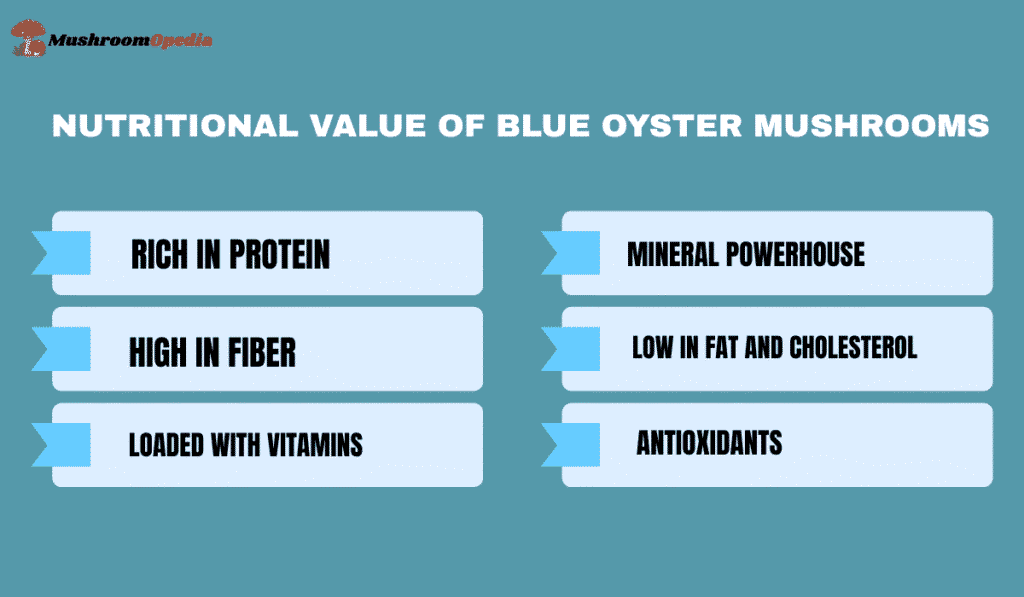
In terms of the blue oyster mushrooms. They are low in calories and filled with essential vitamins and minerals. In a diet, it is healthy,
- Rich in protein: Around 3 grams of protein per 100 grams of raw mushrooms—great for vegetarians and vegans.
- High in fiber: Helps with digestion and keeps you feeling full.
- Loaded with vitamins: Especially B vitamins like niacin (B3), riboflavin (B2), and pantothenic acid (B5), which support energy production.
- Mineral powerhouse: Contains iron, potassium, phosphorus, zinc, and selenium—all important for blood, bones, and immunity.
- Low in fat and cholesterol-free: Ideal for heart health.
- Antioxidants: Help fight free radicals and support long-term health.
On a simple note, consuming blue oyster mushrooms is like giving your body a gentle and nutritious boost.
Health Benefits of Blue Oyster Mushrooms
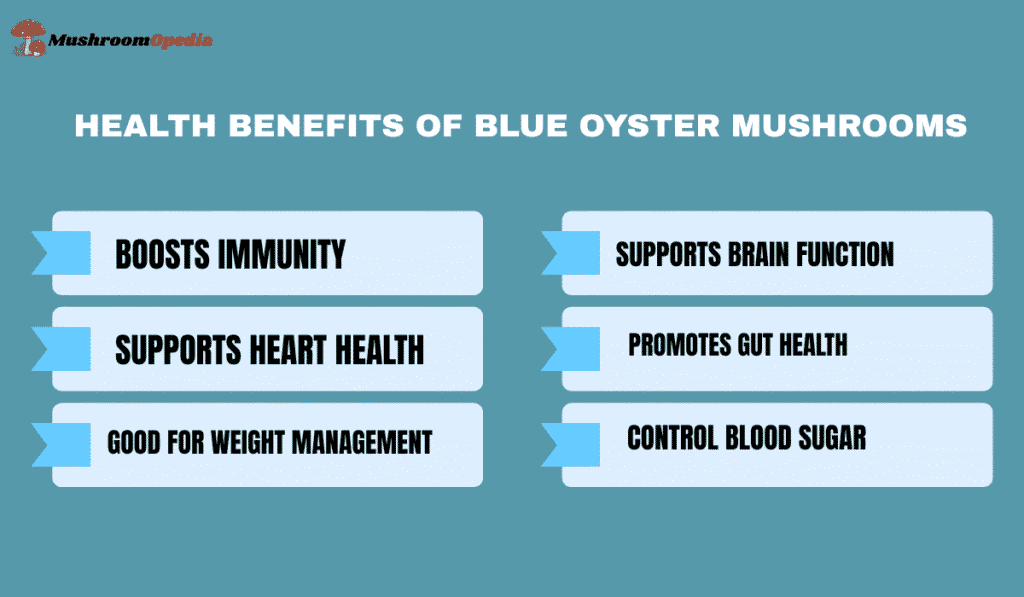
Thanks to the rich nutritional profile of the blue oyster mushroom that offers a wide range of health benefits, like,
- Boosting Immunity
Its antioxidants and compounds, such as beta-glucans, help strengthen the immune system and fight off infections.
- Supporting Heart Health
Several studies have shown that oyster mushrooms may help reduce cholesterol levels. They contain compounds like lovastatin, which naturally lowers bad cholesterol.
- Good for Weight Management
As it is low in calories and high in fiber and protein, it helps keep you full if you are losing weight. It is a good item for weight management.
- Supports Brain Function
It is rich in Vitamin B, which is crucial for brain health and helps in reducing fatigue. Eating blue oyster mushrooms regularly improves concentration and energy levels.
- Promotes Gut Health
The fiber in these mushrooms serves as food for healthy gut bacteria, thereby improving digestion.
- May Help Control Blood Sugar
Some studies show oyster mushrooms may help regulate blood sugar levels—helpful for people with diabetes or pre-diabetes.
Culinary Uses and Taste
One of the main reasons blue oyster mushrooms are gaining popularity is that they’re delicious.
- Looking at the flavor profile, it is often described as savory, umami-rich, and slightly earthy, with a meaty bite. Some people say they remind them of chicken or seafood.
- Regarding its texture, it is firm and chewy, which makes it suitable for imitation meat. For vegetarians, it is best to consume.
- Popular Cooking Methods:
- Stir-frying: Quick and easy—perfect with garlic, soy sauce, or butter.
- Grilling or roasting: Able to bring out a smoky, meaty flavor.
- Soups and stews: They can add depth and richness.
- Pasta and risottos: Blends well with creamy sauces.
- Tacos or burgers: An excellent meat replacement.
Cooking tips: For this, you should be careful not to overcrowd the pan. Let them sear until golden for the best flavor and texture.
How to Grow Blue Oyster Mushrooms at Home
The exciting feature about blue oyster mushrooms is that they’re beginner-friendly to grow.
- They grow naturally
They thrive on dead or decaying wood, logs, or sawdust.
- Growing at home
You can grow them using ready-made mushroom kits or by preparing your own substrate.
Steps to Grow Them:
- Choosing growing medium substrate: Straw, sawdust, coffee grounds, or cardboard.
- For inoculation with spawn, mix the mushroom spores or spawn into the substrate.
- Incubation: Keep the substrate in a warm, dark place until white mycelium spreads.
- For the fruiting method: Move to a humid, well-ventilated area with indirect light. Mushrooms start forming in clusters.
- Harvesting: Pick when the caps are still slightly curled at the edges for the best taste and texture.
Common mistakes that need to be avoided:
- Too much or too little moisture.
- Not enough airflow.
- Touching the mushrooms too much during growth.
With the proper care, you can enjoy fresh, homegrown mushrooms in just a few weeks.
Buying and Storing Blue Oyster Mushrooms
If you are not able to grow on your own, then you can find them in stores
- Where to buy them
Farmers’ markets, Asian grocery stores, health food shops, or online sellers.
What to Look For
- Firm, vibrant-colored caps.
- No slimy spots or unpleasant odor.
- Avoid mushrooms that look too dry or shriveled.
Storage Tips
- Please keep them in a paper bag in the fridge (not plastic, as they’ll become slimy).
- They usually last up to one week if stored properly.
Preservation Methods
- Drying: Dehydrates well and can be rehydrated later.
- Freezing: Sauté first, then freeze.
- Pickling: Preserves flavor and adds a tangy twist.
Sustainability and Environmental Benefits
Blue oyster mushrooms are not only beneficial for health but also beneficial for the plant.
- They can grow on agricultural waste, such as straw, sawdust, and coffee grounds, turning “waste” into food.
- It requires less water and no chemical fertilizers.
- They’re considered a sustainable source of protein compared to meat.
In short, growing and eating blue oyster mushrooms is an eco-friendly choice.
Conclusion
For the following oyster mushrooms, which look exotic, but they are also known to be the easiest gourmet mushrooms to add to your diet. They are highly nutritious, flavorful, and versatile in the kitchen. They are also fun to grow at home. Suppose you are looking for a healthy new ingredient that is sustainable and rich in protein. The following mushrooms are worthy.
Next time you can spot out the market, or you can also grow them in batches for yourself. You don’t have to hesitate to bring them home. As they are unique and delicious in taste, they provide health benefits. These blue oyster mushrooms deserve a good rise in popularity in kitchens around the world.
For more informative articles you can follow us Mushroomopedia