Growing your own mushrooms in the comfort of your home has been gaining popularity in recent years. This could be due to increased awareness of the wellness benefits of certain mushroom varieties. Today, you can find numerous mushroom wellness products for sale, including coffees, teas, tinctures, and powders. Certain mushroom varieties contain antioxidants and other beneficial compounds that are being studied for their potential health benefits.
Growing mushrooms at home is also a rewarding hobby. It allows you to connect with nature while producing a fresh source of nutrition. There is nothing quite like the taste of fresh food you have grown yourself. Many people discover that they enjoy the taste of mushrooms after growing different varieties themselves rather than buying them from the grocery store.
When you decide to grow mushrooms at home, there are several important factors to consider before getting started. The first is the difficulty level of the mushroom variety you choose. Not all mushrooms grow in the same way. Different varieties have different environmental requirements, growing timelines, yields, and material requirements.
Some mushrooms, such as oyster mushrooms, grow quickly and have a relatively low contamination risk when cultivated correctly, making them suitable for beginners. Others, such as morels, can be considerably more challenging because they have specialized growing requirements.
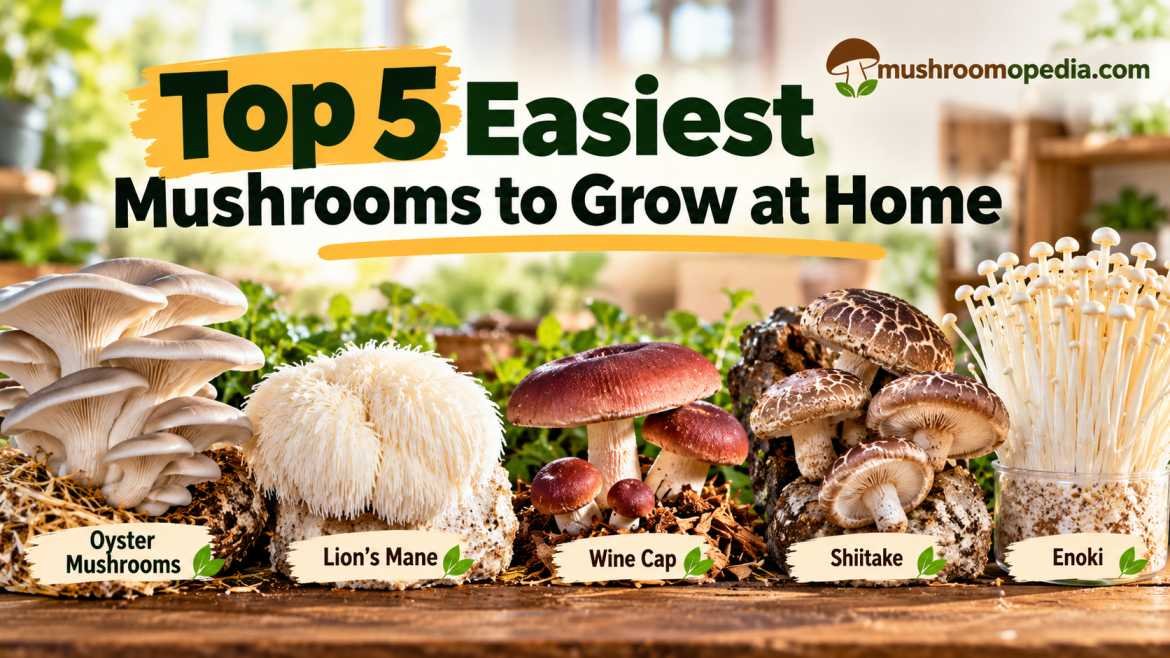
In this article, we will explore the top five easiest mushrooms to grow at home. We will discuss the materials, equipment, and environmental conditions required for each variety. This guide will help you decide which mushroom is best suited to your experience level and growing environment.
The good news is that plenty of information and growing supplies are available online. Mushroom liquid cultures are an important starting point for many cultivation methods. There are several suppliers available, many of whom offer cultures that can help growers begin with suitable mushroom genetics. You can explore mushroom liquid cultures to learn more about the options available. Now, let’s dive into the world of easy-to-grow mushrooms!
What Makes a Mushroom “Easy” to Grow?
When we describe a mushroom as easy to grow, we are referring to several characteristics that make cultivation more manageable for beginners.
An easy-to-grow mushroom generally colonizes its substrate relatively quickly. Faster colonization can shorten the growing cycle and reduce the time during which competing organisms may establish themselves. Another important characteristic is resistance to contamination. Although no mushroom is completely immune to contamination, some varieties are more forgiving than others.
Different mushroom varieties also have different environmental requirements. Some prefer cooler temperatures, while others thrive in warmer conditions. Some require substantial fresh air exchange, whereas others need more controlled airflow. Varieties that tolerate a broader range of conditions are generally easier to cultivate without specialized equipment.
The substrate also plays an important role. Some mushroom varieties grow successfully on readily available materials, such as straw or hardwood sawdust, while others require more specialized substrates. Mushrooms that are less demanding about their growing medium can be more accessible to beginners.
With these factors in mind, let’s explore five mushroom varieties that are worth considering for home cultivation.
#1. Oyster Mushrooms
Oyster mushrooms are widely regarded as some of the easiest mushrooms to grow at home. Popular varieties include blue oyster, pink oyster, king oyster, and golden oyster mushrooms. However, golden oyster mushrooms have invasive potential in some regions, so growers should consider local environmental guidance before cultivating them outdoors.
Oyster mushrooms often colonize suitable substrates quickly, produce generous yields, and provide multiple harvests under favorable conditions. Many varieties can grow on accessible materials such as straw and suitable hardwood-based substrates.
Blue Oyster Mushrooms
Blue oyster mushrooms are particularly suited to cooler growing environments. Their bluish coloration is most noticeable under appropriate growing conditions, and they can produce substantial harvests.
They generally fruit at temperatures of approximately 50–65°F, with relative humidity around 85–95%. They benefit from adequate fresh air exchange, which helps the mushrooms develop properly. Diffused light for several hours a day is generally sufficient.
Suitable substrates include pasteurized straw and appropriate hardwood sawdust formulations.
Pink Oyster Mushrooms
Pink oyster mushrooms are known for their striking color and rapid growth. Unlike blue oysters, they prefer warmer conditions, making them a good option for growers living in warmer climates.
They generally fruit at temperatures of approximately 70–85°F, with relative humidity around 90–95%. They also benefit from adequate fresh air exchange and indirect light.
Pink oyster mushrooms can grow on suitable straw and hardwood-based substrates. Their preference for warmth makes them particularly interesting for indoor cultivation in tropical and subtropical regions, although excessive heat can still affect their development.
King Oyster Mushrooms
King oyster mushrooms are recognized for their thick stems and relatively small caps. Their firm texture makes them particularly popular in cooking, especially in dishes that call for a meaty mushroom texture.
They generally fruit at temperatures of approximately 55–70°F, with relative humidity around 80–90%.
One aspect that requires attention is fresh air exchange. King oyster mushrooms can develop thicker stems under relatively restricted fresh air conditions, while higher fresh air exchange encourages more typical cap development. The ideal balance depends on the growing method and desired mushroom form.
For beginners interested in growing mushrooms for culinary purposes, king oysters offer an appealing combination of texture, flavor, and versatility.
#2. Lion’s Mane Mushrooms
Lion’s mane mushrooms are popular for both their distinctive appearance and culinary qualities. Their cascading, white, hair-like structures make them easy to recognize, while their delicate texture and mild flavor make them an interesting ingredient in a variety of dishes.
Lion’s mane is also frequently discussed in wellness circles because of research into its bioactive compounds. However, potential health benefits should be distinguished from established clinical evidence.
For home cultivation, lion’s mane mushrooms generally fruit best at temperatures around 60–70°F, with relative humidity of approximately 90–95%. They benefit from gentle fresh air exchange and indirect light.
Hardwood sawdust supplemented with an appropriate nutrient source is a commonly used substrate. Ready-to-fruit grow blocks can simplify the process for beginners who do not yet have the equipment or experience to prepare their own substrates.
Lion’s mane may require slightly more attention to humidity and fresh air than oyster mushrooms, but it remains a worthwhile option for home growers who want to cultivate an unusual and flavorful mushroom.
#3. Wine Cap Mushrooms
Wine cap mushrooms, also known as king stropharia, are among the easiest mushrooms to cultivate outdoors. Unlike many varieties commonly grown in indoor fruiting chambers, wine caps can thrive in garden beds containing suitable organic materials.
One of their biggest advantages is that they do not generally require elaborate environmental controls. Once an outdoor bed is established, natural weather conditions can provide much of the moisture, airflow, and temperature variation needed for growth.
Wood chips and straw are commonly used to establish wine cap beds. Spring and autumn are often favorable seasons, particularly when temperatures remain moderate, roughly between 50 and 75°F. Actual results depend on the local climate, moisture availability, and substrate condition.
Wine caps can be a practical choice for gardeners who want to combine mushroom cultivation with other outdoor gardening activities. They can also help beginners understand how fungi interact with organic matter in a natural environment.
Although outdoor cultivation may reduce the need for specialized equipment, growers should still select an appropriate site, maintain adequate moisture, and use correctly identified mushroom cultures.
#4. Shiitake Mushrooms
Shiitake mushrooms are prized for their rich, savory flavor and versatility in cooking. They are commonly used in soups, stir-fries, rice dishes, and many other recipes.
Although shiitake mushrooms are not always as beginner-friendly as oyster mushrooms, they can be reliable when grown under suitable conditions. They are therefore a reasonable choice for growers who are willing to learn more about substrate preparation and environmental management.
Shiitake mushrooms can be cultivated on hardwood logs or prepared hardwood sawdust blocks. Log cultivation generally requires more patience, while supplemented sawdust blocks can offer a more controlled growing process.
For indoor cultivation, fruiting temperatures commonly fall around 55–66°F, although requirements vary by strain. Relative humidity of approximately 85–95% is often appropriate during fruiting, along with adequate fresh air exchange.
One advantage of shiitake cultivation is the potential for multiple harvests from a suitable growing block or log. However, the timing and number of harvests depend on the substrate, strain, and growing method.
For beginners who want a mushroom with excellent culinary value and are prepared to follow growing instructions carefully, shiitake mushrooms are worth considering.
#5. Enoki Mushrooms
Enoki mushrooms may be an unexpected addition to this list because they are less familiar to some home growers. You may recognize them by their long, slender stems and small caps, particularly the pale varieties commonly sold in grocery stores.
Enoki mushrooms are popular in soups, hot pots, and other dishes because of their delicate flavor and distinctive texture.
They generally prefer cool growing conditions. Depending on the strain and cultivation method, fruiting temperatures may range from approximately 40–55°F, with relative humidity around 80–90%.
The most distinctive aspect of enoki cultivation is that the growing environment influences the mushrooms’ appearance. Commercially familiar enoki mushrooms typically develop long, slender stems under specialized conditions involving restricted light and a controlled growing environment.
A collar placed around the growing area can help encourage upward growth by creating a more confined space. However, temperature, light, and other environmental factors also influence the final shape.
Although enoki mushrooms can be rewarding to grow, maintaining consistently cool conditions may make them less convenient for beginners living in warmer climates. A suitable grow kit or carefully selected strain can make the process more manageable.
Comparison Table: Which Mushroom Is Easiest to Grow?
The following table summarizes the main characteristics of the five mushroom varieties discussed above. Temperature and humidity ranges are approximate and may vary according to the strain and growing method.
| Mushroom Variety | Typical Fruiting Temperature | Relative Humidity | Suitable Substrate | Beginner Friendliness |
|---|---|---|---|---|
| Oyster | 50–85°F, depending on variety | 85–95% | Straw or suitable hardwood substrate | Very easy |
| Lion’s Mane | 60–70°F | 90–95% | Hardwood sawdust blocks | Easy to moderate |
| Wine Cap | Approximately 50–75°F | Depends on outdoor conditions | Wood chips or straw | Very easy outdoors |
| Shiitake | Approximately 55–66°F for suitable strains | 85–95% | Hardwood logs or sawdust blocks | Easy to moderate |
| Enoki | Approximately 40–55°F | 80–90% | Suitable prepared growing substrate | Moderate |
Which Mushroom Should You Choose?
- For first-time growers: Oyster mushrooms are an excellent starting point because they grow quickly and are relatively forgiving.
- For outdoor gardeners: Wine cap mushrooms are a practical choice if you have suitable garden space and organic substrate.
- For culinary variety: Lion’s mane and shiitake mushrooms offer distinctive flavors and textures.
- For cool growing environments: Enoki mushrooms may be worth trying if you can maintain their preferred conditions.
These categories are general guidelines rather than guarantees. The quality of the culture, substrate preparation, cleanliness, and environmental conditions all influence the results.
Tips for Beginner Mushroom Growers
Growing mushrooms at home can be rewarding, but a little preparation goes a long way. Following a few basic principles can help you avoid common mistakes and improve your chances of success.
1. Choose a Reliable Supplier
Starting with a suitable, healthy culture is an important step in mushroom cultivation. Choose a reputable supplier that clearly identifies the mushroom species, provides appropriate storage instructions, and offers useful cultivation guidance.
You can also purchase complete grow kits, which may be convenient if you are unfamiliar with substrate preparation. As your experience grows, you may prefer to purchase individual supplies and develop a cultivation process that suits your needs.
2. Start with Oyster Mushrooms
If this is your first attempt at growing mushrooms, consider beginning with an oyster variety suited to your local climate. Oyster mushrooms generally grow quickly and can help you understand the fundamentals of colonization, humidity management, fresh air exchange, and harvesting.
Starting with a relatively forgiving species allows you to build confidence before moving on to varieties with more specialized requirements.
3. Learn Proper Hygiene and Contamination Prevention
Cleanliness is one of the most important aspects of successful mushroom cultivation. Contamination can interfere with colonization and prevent mushrooms from developing properly.
Use clean equipment, follow the recommended substrate preparation method, and handle cultures according to appropriate sterile or sanitary procedures. The level of sterility required depends on the growing method and materials being used.
Even when environmental conditions appear ideal, contaminated cultures or substrates can undermine the entire process.
4. Understand Your Mushroom’s Environmental Requirements
Avoid assuming that every mushroom needs the same temperature, humidity, airflow, or lighting conditions. Oyster mushrooms, lion’s mane, wine caps, shiitake, and enoki all have different preferences.
Before beginning, review the growing instructions for your specific variety. A thermometer and hygrometer can help you monitor temperature and humidity, while proper ventilation helps maintain suitable fresh air exchange.
Small adjustments based on the species’ requirements can make a meaningful difference in the final harvest.
5. Read the Entire Growing Guide Before Starting
One of the most common mistakes beginners make is starting cultivation before understanding the complete process. Read the instructions carefully and ensure you have all the necessary materials before beginning.
Pay particular attention to details such as substrate preparation, cooling requirements, moisture levels, and handling procedures. For example, if the instructions specify that a prepared substrate must cool completely before inoculation, follow that guidance to avoid damaging the culture or increasing contamination risks.
Being prepared from the beginning is generally easier than trying to correct problems later.
6. Keep a Simple Growing Journal
Recording your observations can help you understand what works best in your growing environment. Note the mushroom variety, substrate, temperature, humidity, colonization time, and harvesting dates.
Over time, these records can help you identify patterns, improve your methods, and make better decisions when trying a new variety.
Conclusion
Growing mushrooms at home is an accessible and rewarding hobby when you choose a suitable variety and understand its basic requirements. From fast-growing oyster mushrooms to outdoor-friendly wine caps and flavorful shiitake mushrooms, there are several options for beginners with different levels of experience and available space.
For most first-time growers, oyster mushrooms are an excellent starting point because they tend to colonize quickly and tolerate a reasonably broad range of growing conditions. Wine caps are another strong option for those who prefer outdoor cultivation, while lion’s mane, shiitake, and enoki provide opportunities to explore different culinary varieties.
Ultimately, successful mushroom cultivation depends on choosing an appropriate species, using a suitable substrate, maintaining the right environmental conditions, and preventing contamination.
Start with one variety, follow a reliable growing guide, and learn from each harvest. With patience and practice, you can develop the skills needed to cultivate a wider range of mushrooms at home.